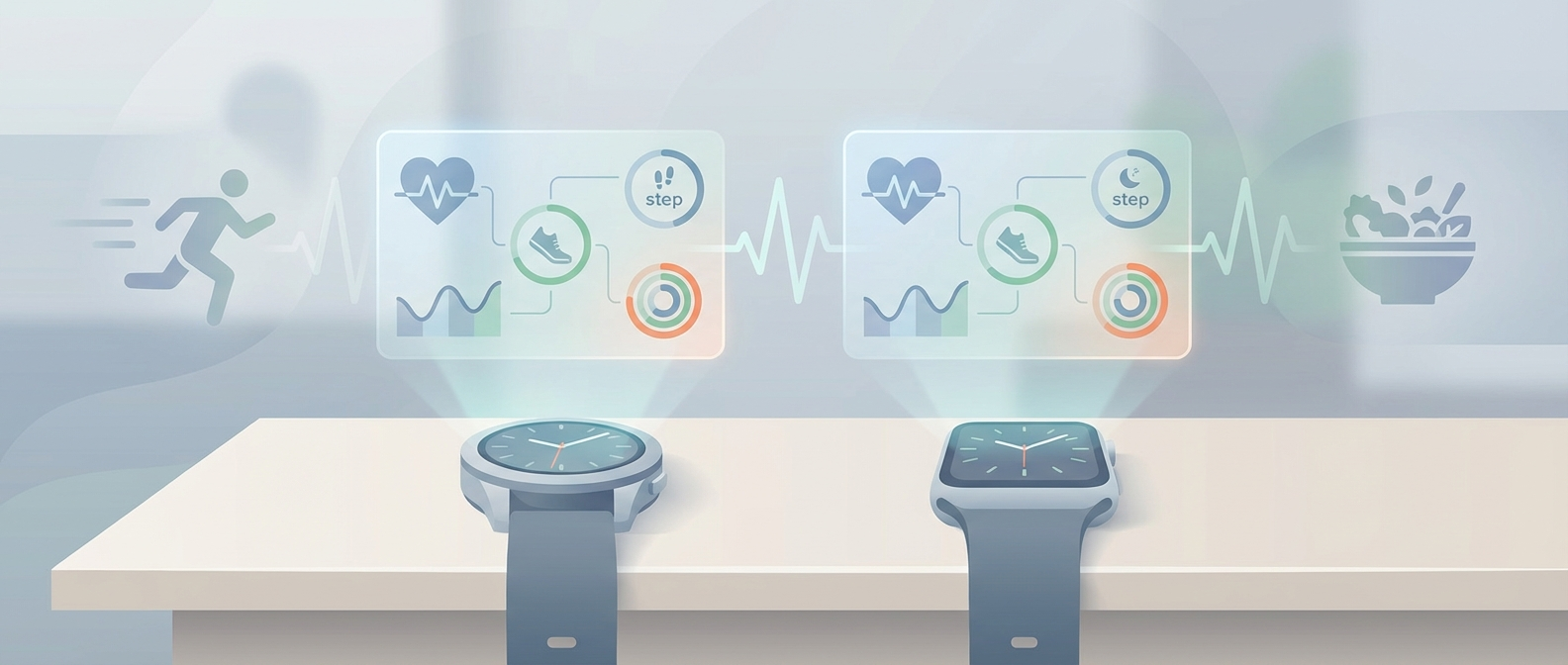

Apple Watch vs Garmin Venu 3: Quick Verdict (2026)
After spending time with both devices, the verdict is clearer than most reviews will tell you: the Apple Watch Series 10 and the Garmin Venu 3 are not really competing for the same buyer. The Apple Watch is the best smartwatch for iPhone users who want health features baked into their daily digital life. The Garmin Venu 3 is for people who prioritize battery life, platform independence, and wellness-focused fitness tracking above all else.
If you're an Android user, the Apple Watch is immediately off the table — it only works with iPhone. If you live inside the Apple ecosystem and want tight integration with your iPhone, iPad, and Mac, the Garmin is going to feel like a step sideways on smart features even if it leaps ahead on battery endurance. The right choice here almost always comes down to your phone and what you value most in a wearable.
Specs at a Glance: Apple Watch Series 10 vs Garmin Venu 3
| Feature | Apple Watch Series 10 (46mm GPS) | Garmin Venu 3 |
|---|---|---|
| Starting Price | $429 | $449.99 |
| Display | 2.0" Always-On LTPO3 OLED | 1.4" AMOLED touchscreen |
| Battery Life (Smartwatch Mode) | Up to 18 hours typical | Up to 14 days |
| Battery Life (GPS Active) | Up to 7 hours | Up to 20 hours |
| Water Resistance | 50 meters (WR50) | 5 ATM |
| ECG | Yes | No |
| Blood Oxygen (SpO2) | Yes | Yes (Pulse Ox) |
| Heart Rate Monitoring | Continuous optical | Continuous optical |
| HRV Tracking | Yes | Yes |
| Crash Detection | Yes | No |
| Smartphone Compatibility | iPhone only | iPhone & Android |
| Third-Party App Store | Yes (App Store) | Limited (Connect IQ) |
| Weight | 36.4g (aluminum case) | 49g |
| NFC Payments | Yes (Apple Pay) | Yes (Garmin Pay) |
Design and Display: Two Very Different Philosophies
Apple Watch Series 10 — Sleek, Familiar, and Refined
Apple's rectangular, jewellery-grade aluminum design is instantly recognizable and continues to improve with each generation. The Series 10's 2.0-inch Always-On LTPO3 OLED display is one of the brightest and most readable on any smartwatch. It's thin, it sits flat on the wrist, and it genuinely passes as a fashion accessory rather than a sport gadget. The interchangeable band system is unmatched in third-party support — you can find a quality band for virtually any occasion or budget.
The tradeoff is the square form factor, which divides opinion. Some users find it refreshing and modern; others want a round watch face that blends in more traditionally. If you care about aesthetics and the Apple Watch's look appeals to you, nothing at this price point matches its polish.
Garmin Venu 3 — Round, Sporty, and Surprisingly Wearable
The Garmin Venu 3 takes a different approach with its 1.4-inch round AMOLED display, housed in a polymer case with a stainless steel bezel. It looks more like a traditional watch than a piece of tech, which many users prefer in professional or social settings. The AMOLED screen is vivid with strong color contrast, though it is smaller than Apple's offering and lacks the always-on brightness headroom of the Series 10.
Where Garmin really wins on design is durability and comfort during extended wear. At 49g it is heavier than the Apple Watch's 36.4g, but the round form distributes that weight more naturally across the wrist. For people wearing a tracker 24/7 — including during sleep — the Venu 3's rounded edges tend to feel less intrusive overnight.
Health and Fitness Tracking: Where Each Watch Wins
Heart Rate, ECG, and Clinical-Grade Features
Apple has a meaningful edge in clinical health monitoring. The Apple Watch Series 10 includes an electrical heart sensor capable of generating ECG readings that can detect signs of atrial fibrillation — a feature that has genuinely helped users identify cardiac irregularities before a doctor visit. It pairs with continuous optical heart rate monitoring and includes irregular rhythm notifications. The Garmin Venu 3 offers continuous heart rate monitoring and HRV tracking, but it does not include ECG capability. If cardiac health monitoring matters to you or someone you're buying for, that gap is significant.
Both watches track blood oxygen (SpO2), though Apple's implementation integrates more tightly with its Health app and provides historical trending directly on device. Garmin's Pulse Ox readings are accurate but slightly less prominent in the user interface.
Newsletter
Get the latest SaaS reviews in your inbox
By subscribing, you agree to receive email updates. Unsubscribe any time. Privacy policy.
Sleep Tracking: Garmin Takes the Edge
This is one area where the Garmin Venu 3 genuinely outperforms the Apple Watch, and it comes down entirely to battery life. The Apple Watch's 18-hour typical battery means most users take it off overnight to charge — which means no sleep data at all unless you actively manage charging windows. The Garmin Venu 3's 14-day smartwatch battery means you can wear it every night for two weeks without thinking about it.
Garmin's sleep analysis includes sleep stages (light, deep, REM), sleep score, HRV status, and a Body Battery metric that estimates your energy reserves based on sleep quality and stress levels. Apple's sleep tracking, when you do wear it overnight, captures sleep stages and provides a Sleep Focus mode — but the depth of Garmin's long-term wellness picture is hard to replicate if you're constantly managing charge cycles. For dedicated sleep tracking, standalone devices like the Oura Ring 4 remain the gold standard, but between these two watches, Garmin wins comfortably.
Workout and Activity Tracking
The Apple Watch handles everyday workouts — running, cycling, swimming, HIIT, yoga — with an intuitive interface and accurate calorie tracking. Its auto-workout detection is reliable, and results sync instantly to Apple Health and third-party apps like Strava. For gym users and casual runners, it does everything needed without friction.
The Garmin Venu 3 is positioned as a lifestyle and wellness hybrid rather than a serious training tool. As noted in comparison testing, it is "not as deep for training as Forerunner/fēnix" series Garmin watches, but it still covers a wide range of sports profiles, animated on-device workout guides, and Garmin's Body Battery and Stress tracking overlaid across the day. For someone who attends fitness classes, runs 3-4 times a week, and wants guidance between sessions, the Venu 3 is a strong match. Dedicated athletes training for races would be better served by something like the Garmin Forerunner 265 or 965.
Battery Life: The Single Biggest Differentiator
No comparison between these two devices can ignore battery life — it is the sharpest divide between them. The Apple Watch Series 10 delivers approximately 18 hours on a single charge in normal use, or up to 36 hours in Low Power Mode that disables certain sensors. In GPS workout mode, expect roughly 7 hours before you're reaching for the charger. For a device priced at $429, that is serviceable but genuinely limiting for anyone who wants continuous tracking or multi-day trips without a charger.
The Garmin Venu 3 lasts up to 14 days in standard smartwatch mode and up to 20 hours with GPS active. That means a full two weeks of sleep tracking, workout logging, stress monitoring, and notification management before you need to plug in. For travelers, outdoor enthusiasts, or anyone who simply finds daily charging tedious, that battery difference is not incremental — it fundamentally changes how you use the device.
If battery anxiety is a real concern for you, it is worth noting that Apple's ecosystem offers no equivalent at any price point within the Watch lineup. Even the Apple Watch Ultra 2, designed for extreme outdoor use, tops out around 36 hours typical and 60 hours in ultra-low-power mode. Garmin's battery architecture is a structural advantage across the entire product line.
Smart Features and Ecosystem: Apple's Home Turf
App Ecosystem and Third-Party Integration
The Apple Watch runs watchOS on top of a massive App Store library. Whether you want a meditation app, a blood sugar monitor companion, a tide chart, or an airline boarding pass, there's almost certainly an app for it. The watch works as an extension of your iPhone — receiving calls, replying to messages via Siri, unlocking your Mac, and triggering HomeKit automations. For anyone embedded in Apple's product ecosystem, removing the Apple Watch from your wrist creates a noticeable gap in daily convenience.
Garmin's Connect IQ platform has improved significantly but remains a distant second. You can install watch faces, data fields, and select apps, but the catalog is far smaller and less polished. Garmin's strength is its own first-party software ecosystem — the Garmin Connect app is genuinely excellent for long-term health trend analysis, training load, and wellness metrics — but it doesn't replicate the breadth of watchOS third-party apps.
Platform Lock-In and Switching Costs
This is the conversation most reviews skip. If you buy an Apple Watch today and later switch to Android, you lose the watch entirely — it simply won't function. The Garmin Venu 3 pairs with both iOS and Android, making it a safer long-term investment if you're not certain about your phone ecosystem. Android users looking at this comparison should also consider the Samsung Galaxy Watch 8 or the Google Pixel Watch 4 for tighter Android integration, but the Garmin's cross-platform support is a real advantage for anyone who switches phones regularly.
Who Should Buy Each Watch?
Buy the Apple Watch Series 10 If:
- You own an iPhone and are committed to the Apple ecosystem
- ECG and irregular heart rhythm detection matter to you
- You want the deepest third-party app support of any smartwatch
- You prioritize display quality and seamless notification management
- You charge your watch nightly and don't find that inconvenient
It's also worth noting that if you're considering a future upgrade, the Apple Watch Series 11 is expected to push health tracking even further — the investment in Apple's wearable platform has strong long-term value for iPhone users.
Buy the Garmin Venu 3 If:
- Battery life over multiple days or weeks is a priority
- You want uninterrupted sleep tracking without charging anxiety
- You use Android, or switch between Android and iPhone
- You value the Body Battery, HRV Status, and Garmin's holistic wellness picture
- You participate in gym classes and want on-device workout guidance
If your budget is tighter but you still want solid activity tracking, the Fitbit Charge 6 offers a cross-platform option at a lower price point — though it trades the Venu 3's AMOLED display and watch-like form factor for a slimmer fitness band design.
Final Verdict
Picking a winner in the Apple Watch vs Garmin Venu 3 comparison depends entirely on what you're optimizing for. There's no universally better device here — only the right device for your situation.
The Apple Watch Series 10 is the best overall smartwatch money can buy for iPhone users. The integration is seamless, the ECG and safety features are genuinely useful, and the app ecosystem is unmatched. Its battery life is the one real compromise you make, and for most people who are near a charger each night, it's a manageable one.
The Garmin Venu 3 wins on battery endurance, sleep tracking depth, cross-platform flexibility, and the quality of Garmin's wellness analytics. It's the better choice for users who want comprehensive, continuous health data without the daily charging ritual — and for anyone not on iPhone, it's not even a close call.
Both are excellent devices. Both justify their price in different ways. Know your priorities, know your phone, and you'll make the right call.